
Insight • June 11, 2026
AI and children: What every parent needs to know
AI and children are becoming one of the most discussed topics in education among parents and educators. Artificial intelligence is now part of everyday life, from search engines and homework tools to apps that generate answers in seconds. For parents, this raises a simple but serious question: If children can access information instantly through AI, what should they still be learning? The answer is not to avoid AI, but to understand how it is reshaping learning itself.
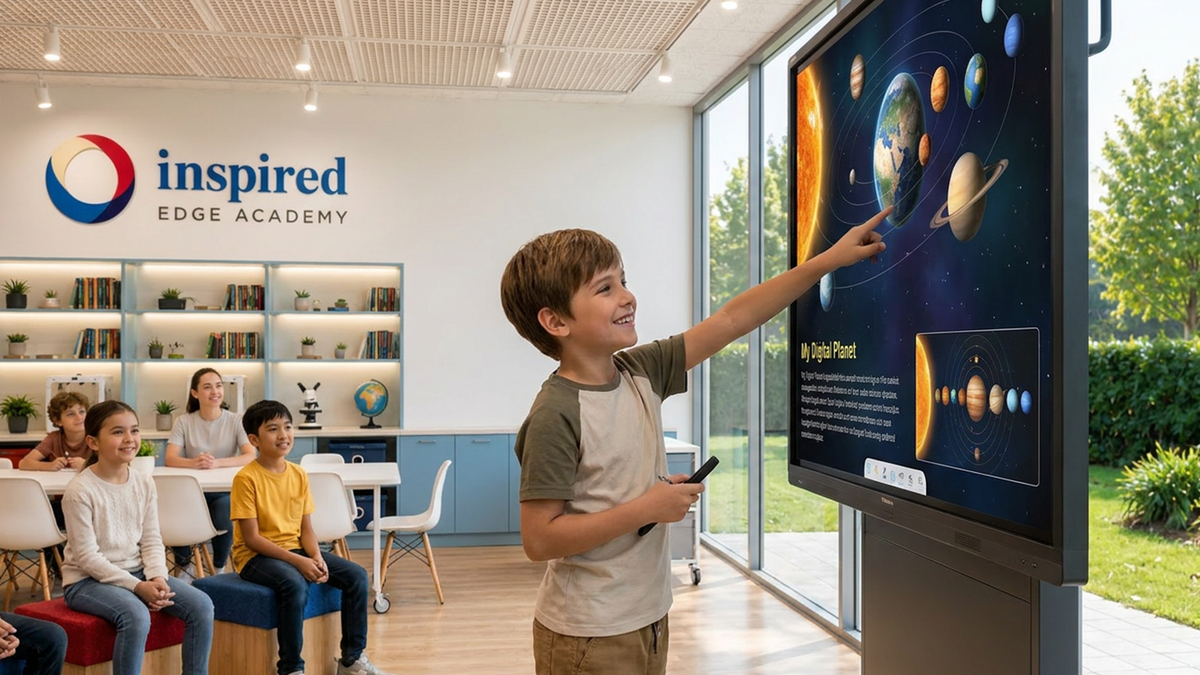
AI can give answers, but learning is more than answers.
Artificial intelligence is extremely effective at providing information quickly. It can summarise topics, explain concepts and is even able to complete assignments.
However, learning has never been only about answers.
Children develop real understanding when they are able to question information, compare ideas and apply knowledge in different contexts outside of an educational setting. Without these skills, AI becomes a shortcut rather than a learning tool. The goal is not to compete with AI, but to ensure children do not depend on it without compromising their ability to think.
Why AI in education is changing the conversation.
AI in education is not a future concept. It is already present in classrooms, tutoring platforms and as learning tools used at home. This shift changes what is valued in learning. Memorisation alone is no longer enough. Instead, emphasis is moving toward reasoning, interpretation and problem-solving. Children need to understand not just what the answer is, but why it is the answer.
Should children use AI?
The question is not whether children should use AI, but how they should use it.
Used well, AI can support learning by:
• Explaining difficult concepts in different ways
• Providing practice and repetition
• Encouraging independent exploration
Used poorly, it can:
• Replace thinking with instant answers
• Reduce effort in problem-solving
• Encourage passive learning habits
The difference lies in guidance rather than restriction, ensuring children learn to use AI as a tool that supports thinking rather than replaces it.
From understanding to action: Building real-world AI skills
Understanding AI is only the first step. The real challenge is helping children develop the skills to use it thoughtfully and with purpose in everyday learning. At Edge Academy, this shift from theory to practice is central to how learners are supported. The focus is not just on academic content, but on building the thinking skills, digital awareness and independence needed in an AI-influenced world.
Through structured learning experiences, children are encouraged to engage with technology in a way that strengthens reasoning rather than replaces it. This includes guided exploration, problem-solving tasks and opportunities to reflect on how AI tools shape the way they learn.
For parents looking to go beyond awareness, this approach ensures children actively develop the skills needed to use AI effectively in their learning. Rather than simply understanding technology, they learn how to engage with it critically, apply it appropriately and maintain independent thinking alongside digital tools.
What matters most in an AI-powered world
The way children think and learn continues to evolve alongside rapid advances in artificial intelligence. In this context, the most valuable skill they can develop is not the ability to find answers quickly, but the ability to evaluate them critically and think with clarity. In a world where information is unlimited, judgment becomes the real advantage.
At Edge Academy, this is supported through structured learning that develops AI literacy, critical thinking and digital awareness in a deliberate and consistent way.