Insight
Schools of the future: What education should look like in 2027
Schools of the future are becoming a key topic of discussion among parents, educators and policymakers as traditional education models are increasingly being questioned. As learning, child development and technology evolve, there is growing uncertainty about whether current school systems are still designed for the world children are growing up in.
Why schools of the future require a different approach
Many aspects of current education systems were designed for a different era. While academic foundations remain essential, the structure and delivery of learning are increasingly being re-evaluated. Schools are shifting towards more intentional learning design, prioritising understanding over curriculum coverage. There is also a stronger emphasis on the meaningful use of technology to build both knowledge and real-world capability. The goal is not to make education more demanding, but to make it more effective and purposeful.
Rethinking how education is delivered in an ever-changing world
Rethinking education is no longer a theoretical conversation; it reflects a fundamental shift in how learning is structured and delivered. Traditional school models often divide the day into rigid time blocks and isolated subjects. Increasingly, this fragmented system is being replaced by integrated approaches designed around future-focused capabilities.
As education evolves toward 2027, forward-thinking institutions are moving beyond simple knowledge delivery to reshape the daily learning experience across six core pillars:
| Traditional Frameworks | The Future-Focused Approach |
|---|---|
| Rushed syllabus coverage: Prioritises speed over depth, often leaving gaps in understanding. | 1. Deep understanding & mastery: Gives students the time and support to develop genuine understanding before moving on. |
| Isolated disciplines: Subjects are taught separately with limited connection between them. | 2. Connection over fragmentation: Connects learning across subjects so students can see how knowledge applies in different contexts. |
| Rote repetition: Focuses on memorisation and repetitive tasks rather than understanding. | 3. Depth & reflection: Prioritises meaningful inquiry, critical thinking and reflection over repetitive tasks. |
| Theoretical learning: Knowledge is taught without clear real-world application. | 4. Real-world application: Links learning to authentic challenges, helping students understand why knowledge matters. |
| One-size-fits-all pace: All students move through content at the same speed. | 5. Personalised pathways: Adapts learning to students' strengths, interests and individual learning needs. |
| Static skills: Prepares students for fixed outcomes rather than changing demands. | 6. Lifelong adaptability: Develops the confidence and flexibility needed to navigate a changing world. |
From vision to practice: How schools are evolving
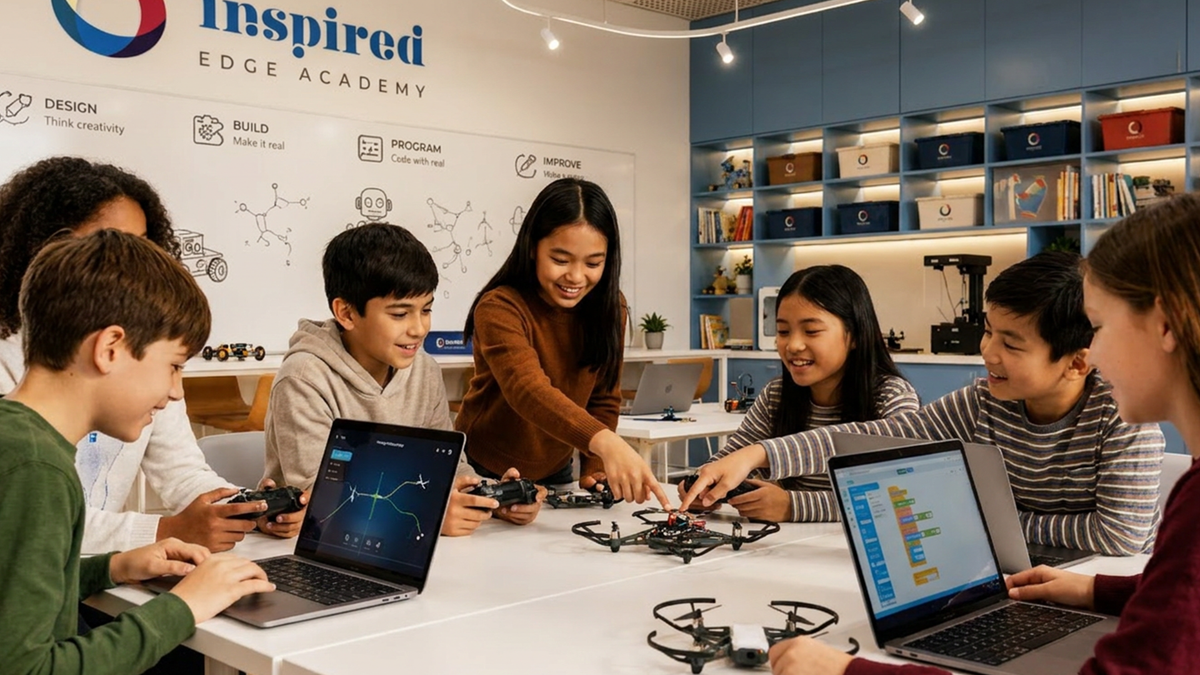
Understanding how schools of the future may look is only the starting point. At Edge Academy, this approach is reflected in how learning is structured. Learners are supported through an approach that balances academic development with real-world capability, ensuring they are prepared not only for examinations but for life beyond the classroom.
The most effective schools will be defined by how well they develop understanding, adaptability and the ability to apply learning in changing contexts. They will be defined by how effectively they develop understanding, adaptability and the ability to apply learning in changing contexts.
As education continues to evolve, the most successful schools will be those that design learning around purpose, not volume.